
BA (Hons) Fine Art

Welcome to the BA (Hons) Fine Art programme.

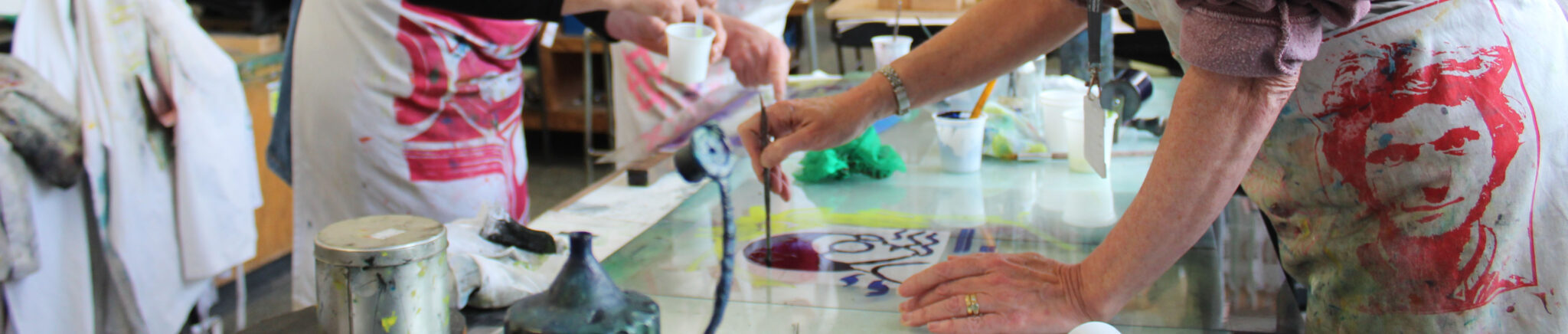
This dynamic studio-centred course will provide you with generous space and fantastic contact time with practicing artists and academics. Via integrated approaches to practice and theory, you will learn to develop a confident and independent sense of enquiry in relation to contemporary fine art and practice-led research.

The lecturing team is focused on developing you artistically, technically and holistically, in other words, as an all-round fine art practitioner.

Interested? Book your place on an Open day or get in touch with University Centre Colchester to arrange an individual visit.

Course enquiries:01206 712432
Ask a question
CourseInformation
OpenEvents
PlacesTo Live
AboutFinances
AcademicCalendar
ProspectusRequest
Course IntroductionModulesEntry RequirementsGraduate CareersAdditional

Your profile
You are an inquisitive, creative, critical and practical thinker. You have a desire to engage in the ever-expanding field of contemporary fine art practice and enjoy making work in and out of a studio environment that affords the free development of your ideas.

Your subject
Contemporary art practice is a broad and ever-evolving field and is an integral part of our culture. It involves making art that relates to the world you live in and requires the development and application of a wide range of attributes, including practical skills, aesthetic and ethical understanding, and an awareness of the way cultural, social and political contexts have a bearing on how your work is produced and experienced.

The BA (Hons) Fine Art at University Centre Colchester is a studio and workshop-based programme that will provide you with generous space and the support of expert tutors and practicing artists, to establish a confident and independent enquiry in contemporary fine art practice.

Innovative tutoring provides an integrated approach between art practice and theory, allowing you genuine opportunities for critical thinking and creative ownership of your progress.

This course is driven by independent enquiry, structured and supportive exposure, self-motivated practice and focused creative thought. Painting, printmaking and sculptural concerns are energised by drawing, lens and time based processes and imaginative use of media/materials supported by a critical theoretical framework.

Delivery is through a combination of lectures, seminars, tutorials, demonstrations, theoretical and practical investigation, studio and workshop practice, exhibitions and field trips, and self-directed study. Students will investigate exhibiting and curation of work in a range of public settings and explore the interaction of audiences with their practices.

Undergraduate courses operate on a modular basis that provides flexibility and choice. Each module is worth a specified number of credits, with most modules counting for 20 or 40 academic credits (depending on the programme), with each credit taken equating to a total amount of study time which includes scheduled teaching, independent study and assessment activity.

Most full-time students will take modules worth 60 credits per semester, with part-time students taking proportionately fewer credits per semester. A total of 120 credits per level and 360 credits are needed for an honours degree as a whole. Overall grades for the course and degree classification are based on the marks obtained for modules taken at levels 5 and 6.

Our teaching is informed by research, professional practice and industry engagement and modules change periodically to reflect developments in the discipline.

Year One (Level 4) Year Two (Level 5) Year Three (Level 6) Contextual Studies Portfolio Guidance Graduate Award Scheme

Portfolio of artwork supported by 64 UCAS points gained from study on Foundation Diploma in Art and Design or level 3 Diploma in an art related subject along with 5 GCSEs (grades A*-C) including English language, or an Art and Design Foundation Year. Exceptionally, A Level applicants with appropriate portfolio of artwork and knowledge. Students without formal qualifications but with appropriate portfolio of artwork/work experience. All applicants are formally interviewed.

*UCAS Tariff points where shown, are for entry on to higher education programmes starting from September 2025.

International applicants

If English is not your first language you will need an IELTS score of 6.0, with a minimum score of 5.5 in each component (Reading, Writing, Listening and Speaking), or an equivalent English Language qualification.

Additional requirements for International Students:

  • You must provide evidence of having been in general education for at least 10 years and of having studied within the last five years
  • a face-to-face or video call interview is required before an offer is made

The creative industries generate £87.4bn a year for the UK economy, representing the third largest employment sector. It is currently the largest source of job growth, contributing one in every nine new jobs.

Your future
As your course progresses, you will increasingly research and explore possibilities for future professional work opportunities and roles in the creative industries or further, postgraduate study. You will graduate as a confident and knowledgeable individual, aware of how your practice contributes to the critical debate in your chosen field. Recent graduates have gone onto exhibit work at FREE RANGE in London, Europe’s largest graduate showcase, while others have gained gallery representation, exhibiting at Manchester Contemporary Art Fair, established their own artist-led projects (such as Art4U), or joined one of the many studio-based artist communities in the area, such as Cuckoo Farm, SPACE and Mother Studios. As a graduate, you can also progress onto teacher training or extend your research interests through other postgraduate level programmes in Fine Art or Contemporary Art Practice at institutions throughout the UK.

The holistic and flexible nature of the BA [Hons] in Fine Art course will enable you to engage independently and professionally as an artist practitioner within that sector. The course will provide you with opportunities to network and experience professional practice environments, with a module in the third year, Professional Development Planning, that is tailored to proactively researching and moving towards your chosen career path such as, community arts; multimedia production; gallery and museum work; art therapy; MA research and independent studio practice.

Course Progression

An MA in Art specialisms, or an MA in Arts Management or Administration. The educational sector can be accessed through a Professional Graduate Certificate in Education.

Alumni Bulletin

BA (HONS) Fine Art

Contemporary art practice is a broad and ever-evolving field, and is an integral part of the creative industries, which generate £100bn a year for the UK economy. Fine art graduates possess highly transferable skills, specialist technical knowledge and an innovative approach which allows them to contribute right-across the industry. Art careers in the sector vary from working for global art institutions to community focused artist-led programs.

MEET: AMY TURNBULL

On graduating in 2011 Amy received the Cuckoo Farm Studios Graduate Award which included; studio space for a year, a bursary and a solo exhibition at The Minories Gallery. Amy still has a studio at Cuckoo Farm and is currently the chairperson.
Amy has exhibited her work in both London and Essex. On leaving Colchester School of Art Amy went onto work at Firstsite, while there she undertook many different roles including working in Artist Development and for the Essex Network of Artist Studios. Amy has also been a recipient of the Firstsite Collectors Group Bursary and the Essex Network of Artist’s Studios travel bursary, she has produced learning packs for Firstsite and has also had sculpture commissioned by Essex County Council.
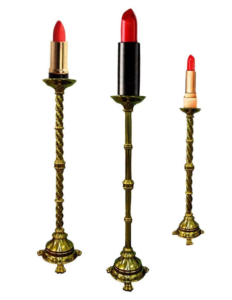
Amy is one half of Stitch & Bitch a Colchester group, who meet once a month at the Colchester Maker Space. They are currently involved in a large exhibition project at Firstsite and will also be helping out with events ‘Snapping the Stiletto’ and The Sudbury Silk Festival.

Amy’s most recent work creates conversations, transitioning from high-fi to low-fi, disrupting our methods of communication, especially with social media as she reverts back to the analogue. It reflects anxiety, somewhere between communication and misunderstanding or a loss of connection.

MEET: JOE DANIELS

Joe Daniels is an Essex based artist who graduated from Colchester School of Art in 2017, where he studied Fine Art. He is currently training to be a teacher in further education.
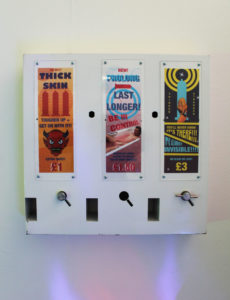
Joe’s artistic practice involves the use of objects, printmaking and lighting which come together as immersive and interactive installations such as his degree show work titled ‘Romantic Boys Club’ which mimicked the men’s toilets within a typical Essex nightclub. He also works with digital compositions and animated gifs, typically commenting on issues of identity, consumerism, gender and growing up in Essex.
Since graduating Joe has been involved with a number of exhibitions including We: You, Me at Firstsite, Colchester and Manchester Contemporaries in 2017.

He also took the initiative to start up a platform for local emerging artists called ‘Art4u’ which started as an online sharing format but has since held an exhibition in September of 2018 at The Minories Gallery.

Joe was awarded Highly Commended Artist for Fe/Male exhibition, Air Gallery, Manchester, 2018 where he exhibited Condom Machine #1

Alumni Research Sites

BA (Hons) Fine Art Alumni Research

Hannah Stageman

https://www.hannahstageman.com/

BA (Hons) Fine Art - Full-time
LevelLevel 6
LocationColchester
Duration3 Years
UCAS CodeW191
Academic Year2024-2025
Study ModeFull-Time
Campus / Adult Skills CentreUniversity Centre Colchester
Start DateSeptember 2024
ApplicationsThis course is now closed for applications
Fee(s)2026-27: £8,995 per year
Additional Cost Information

The School of Art provides access to a wide range of specialist equipment relevant to courses. However, many students prefer to have their own laptop, and students will need to provide some basic things, such of your own drawing equipment. There will be costs in terms of educational visits, field trips, external exhibitions of your work and the purchase of materials required whilst completing the programme. These vary from year to year. Please contact the Head of School for further details. The majority of materials used in timetabled workshop sessions will still be provided free of charge. However, when students develop ideas/outcomes during independent study time, or when they are relatively expensive, or when a student needs to use particularly large amounts of a material, they may need to buy or make a payment for them. The various workshop facilities keep a list of stock items and their respective costs, but please note that these lists are subject to change and the School may need to add other items as appropriate.

Awarding/Validation BodyUniversity of East Anglia
Year One (Level 4)

Module Code and Title:

DU1BAFAF4A /  DU1BAFAP4A Studio Module 4A: Introduction to Fine Art Process (20 Credits)

What’s it about?

This module is intended to support students in developing their independent ability to apply a range of skills, knowledge and understanding with the use materials, processes and practices relevant to their discipline and personal interests.

What do I learn?

This is a practical, studio-based module.  Through a range of tutor-led workshops and studio-based activity, as well as tutorials, peer review and study visits, students engage with the essential skills, techniques, processes and visual language that create the foundations and basis for further research and exploration in relation to individually determined interests and ideas within the context of the discipline.

Typical of the holistic approach common to art and design courses, the work undertaken for this module exists in a symbiotic relationship with other workshop-based and contextual studies modules.  Collectively, they inform and support student aims, ambitions and the development of their creative identity and working methodologies.

What’s the assignment?

Outcomes will be evidenced through the submission of a body of practical and contextual research, artefacts and written reflection.

Want to know more?

To see the module description, please click here.

DU1BAFAF4B /  DU1BAFAP4B Studio Module 4B: Introduction to Fine Art Practice (40 Credits)

What’s it about?

The purpose of this module is to provide students with the opportunity to develop their creativity and problem-solving skills through the development and production of a resolved body of art or design work, informed by theoretical and practical research and exploration.

What do I learn?

This is a practical, studio-based module that builds upon the work produced for studio module 4A.  Supported by a range of lectures, seminars, study visits, peer review, group and individual crits, it provides the opportunity for students to practice and apply their skills and knowledge to the production of a sustained body of research and resolved practical work and to explore their own emerging interests in greater depth.

As part of that process, and within the context of their discipline, students will define an individual line of enquiry in relation to a brief or theme; engage in structured investigative and exploratory research; select and produce resolved practical outcomes.

What’s the assignment?

Exhibitions, presentations or displays of work may also be a feature of module content and outcomes are evidenced through submission of a body of practical and contextual research, artefacts and written reflection.

Want to know more?

To see the module description, please click here.

DU1BAFAF4D / DU1BAFAP4D Introduction to Drawing (20 Credits)

What’s it about?

This module is intended to support students in developing their knowledge, skills, understanding and application of the materials and fundamental principles of drawing alongside process-led approaches that will inform many aspects of their studio and workshop based studies.

What do I learn?

A studio-based practical module, designed to introduce materials, techniques and processes related to the act and language of drawing.

Through weekly workshop sessions, working from observed phenomena and conceptual information, students will explore contemporary approaches to drawing practice and develop or extend their practical experience and theoretical understanding through a broad range of exploratory drawing experiences.

What’s the assignment?

Outcomes will be evidenced through the submission of a portfolio of drawing work, sketchbooks, related contextual research and written reflection.

Want to know more?

To see the module description, please click here.

DU1BAFAF4E / DU1BAFAP4E Workshop module 1: Time-based and Digital Platforms (20 Credits)

What’s it about?

This module is intended to support students in their introduction to time-based media and digital practices within the context of contemporary fine art. This will be undertaken via the formulation of their increase independence to explore and produce material outcomes in personal research interest, in appropriate workshops. Across the module they will demonstrate their ability to apply a range of skills, knowledge and understanding with the application of audio-visual equipment, editing processes and time-based practices relevant to their discipline.

What do I learn?

This is a studio-based practical module, designed to introduce technical, curatorial and other processes related to the production and potential of digital art.

Through weekly workshop sessions, working from observed phenomena and conceptual information, students will explore contemporary approaches to time-based practice and develop or extend their practical experience and theoretical understanding through a broad range of exploratory experiences across photography, performance, film and internet-based art.

What’s the assignment?

Outcomes will be evidenced through the submission of a portfolio of digitally informed work, sketchbooks, related contextual research and written reflection.

Want to know more?

To see the module description, please click here.

Year Two (Level 5)

Module Code and Title:

DU1BAFAF5A /  DU1BAFAP5A Studio Module 5A: Development of Fine Art Process (20 Credits)

What’s it about?

The purpose of this module is for students to develop their independent cognitive, imaginative and problem solving capabilities through the refinement of their practical skills within the context of relevant historical and contemporary theory and practice.

What do I learn?

A studio-based, practical and practice led module that builds upon the knowledge and skills attained at level 4.

Supported by workshops, lectures, seminars, study visits, peer review, group and individual crits, students broaden the practical and conceptual scope of their work, and further develop and refine their individual interests and ambitions through a more in-depth visual and conceptual exploration and experimentation and more detailed analytical and evaluative research that considers their work within an appropriate contextual framework.

What’s the assignment?

Outcomes will be evidenced through submission of a body of practical and contextual research, artefacts and written reflection.

Want to know more?

To see the module description, please click here.

DU1BAFAF5B /  DU1BAFAP5B Studio Module 4B: Development of Fine Art Practice (40 Credits)

What’s it about?

The purpose of this module is to provide students with the opportunity to apply their various skills, knowledge and understanding to the production of a resolved body of art or design work, informed by theoretical and practical research and exploration, cognisant of relevant contemporary and historical contexts and the relationship between their work and audiences, clients or consumers.

What do I learn?

A studio-based, practical and practice led module supported by lectures, seminars, study visits, peer review, group and individual crits.  Based upon their learning experience and reflection on the outcomes from Studio Module 5A, students apply that experience to new projects or the further development of ongoing work.

In what is by now a familiar holistic fashion, they are required to extend the breadth and depth of theoretical and practical enquiry, apply analytical and evaluative skills and strengthen their academic competence and learning in order to sustain an independent and coherent artistic practice.

What’s the assignment?

Exhibitions, presentations or displays of work may also be a feature of module content and outcomes will be a refined body of practical work that demonstrates the development of a personal direction in their discipline that is fully supported by primary and secondary research material.

Want to know more?

To see the module description, please click here.

DU1BAFAF5E / DU1BAFAP5E Workshop module 2: Sculptural Processes & Practice (20 Credits)

What’s it about?

This module will introduce students to the visual language of sculpture and a suitable range of materials and practical concerns related to and informed by contemporary and historical sculptural practice. Alongside introduction and induction into the various tools, materials, processes, techniques and safe working practices, there will be an emphasis on the generation and development of individual ideas through the exploration of materials and technique.

This module will support students in developing their knowledge, skills, understanding and application of the materials and fundamental principles of appropriate sculptural processes alongside process-led approaches that will inform many aspects of their studio and workshop-based studies.  The Sculptural Processes & Practices module will support their ability to make informed decisions to appropriately realise three-dimensional works.

What do I learn?

This is a studio and workshop-based practical module, designed to introduce materials, techniques and processes related sculpture within the context of fine art practice.

Through weekly workshop sessions, working from observed phenomena and conceptual information, students will explore contemporary approaches to a specialist range of sculptural based practices and develop or extend their practical experience and theoretical understanding through a broad range of exploratory experiences involving wood, metal and ceramic based sculptural processes.

What’s the assignment?

Outcomes are evidenced through the submission of a portfolio of practical work, sketchbooks, related contextual research and written reflection.

Want to know more?

To see the module description, please click here.

Year Three (Level 6)

Module Code and Title:

DU1BAFAF6A /  DU1BAFAP6A Studio Module 6A: Refinement of Fine Art Practice (40 Credits)

What’s it about?

The purpose of this module is for students to prepare themselves for entering professional practice, independently planning, researching and developing proposals for a body of art and design work for public exhibition.

What do I learn?

A studio-based practical and practice led module supported by lectures, seminars, study visits, peer review, group and individual critiques.

Through rigorous and systematic self-directed research and exploration, using established techniques of analysis and enquiry, students undertake a further critical, contextual and practical examination of their work in relation to concepts and theories that are relevant to the discipline and their practice.

What’s the assignment?

The desired outcome for this module will be an ambitious and challenging body of work, produced to a professional standard and underpinned by rigorous research and development. It should also demonstrate their ability to create a synthesis between ideas or concepts and the materials, processes and forms employed.

Want to know more?

To see the module description, please click here.

DU1BAFAF6B /  DU1BAFAP6B Studio Module 6B: Professional Fine Art Practice (40 Credits)

What’s it about?

For student to demonstrate the skills, knowledge and abilities they have developed throughout their studies through the production of a body of art or design work that is ambitious, rigorous, refined and resolved, independently produced, and presented or exhibited to a suitably professional standard.

What do I learn?

This is an FMP or ‘capstone’, studio-based, practice orientated module supported by lectures, seminars, study visits, peer review, group and individual critiques.

This module requires students to produce a major body of work for assessment and public exhibition or presentation that represents the culmination and synthesis of their acquired learning, understanding, knowledge and skills.

What’s the assignment?

At the end of the module, students will apply professional standards of preparation and presentation to the public exhibition or presentation of their work to a level that is suitable for display either on campus or in external venues.

Want to know more?

To see the module description, please click here.

Contextual Studies
Portfolio Guidance

All applicants onto the BA in Fine Art course are invited to a formal interview. A major part of the interview process is the presentation of a portfolio of work, demonstrating your previous and current creative interests. This will allow you the opportunity to select a collection of your endeavours and show us your achievements to date.

What Is A Portfolio?

A art portfolio is a collection of creative documents, which are collated together. They act as a visual reference to highlight your creative journey.

Why Does The Interview Require A Portfolio?

The portfolio is the best way for you to demonstrate your current art interests to an audience. It provides the interviewers with a clear understanding of the way you work, how you use materials and helps us assess your suitability for the Fine Art course.

We would recommend:​

> Examples of Research.

> Current Work [even if unfinished]

> Independent Work [produced outside of a qualification]

> Sketchbooks [important in showing your idea development]

> Written Work [Essays etc.]

​And a range of artwork, which could include:

> Drawing & Painting

> Printmaking

> Video, Film, Audio Recordings

> Performance

> Installation

> Photography

> Textiles

> 3D Design | Sculpture

> Graphic Communication

> Digital Imagery

What If I Have Digital Work Such As Film, Animation Or Video?

If you have digital work which you would like to include, we would suggest transferring any files onto a USB and bringing this with you. During the interview process there will be the opportunity to show these works via a monitor.

How Do I Present My Portfolio?

There is no set requirement or size of portfolio. Whatever is suitable to present the work.

But we suggest:

Keep it simple and organised.

Be practical – what you can carry. 

> Just bring your best work.

> Bring photographic imagery of large sculptures etc.

> 1 or 2 Small 3-D works are fine.

> Start and end with strong work.

> Have an order – i.e. chronological or grouped projects.

> Be able to talk about the work you have selected.

Graduate Award Scheme

The annual Graduate Award Scheme supports the progression and development of a graduating student from the School of Art. The scheme is aimed at providing a fantastic opportunity to an individual looking to jump start their creative career, becoming part of Colchester’s vibrant creative community , and based at one of the largest artist studios in the South East.

The Graduate Award Scheme is a partnership between Colchester Art Society, Cuckoo Farm Studios and Colchester School of Art.

The selected School of Art graduate receives:

  •  A multipurpose studio at Cuckoo Farm Studio for one year
  • £1000 bursary from Colchester Art Society
  • One year Colchester Art Society membership
  • Solo exhibition at The Minories.
  • Annual exhibiting opportunities.
  • Mentoring and Networking opportunities to support a viable practice.

Video Credit: Noah Carter Studio

Disclaimer

All Fees and prices shown on the website are for courses starting in the 2025-26 academic year and are correct at the time of entering/printing information, however these may be subject to change. The College cannot accept legal or financial liability as a result of any such changes.

The course information describes programmes offered by University Centre Colchester at Colchester Institute. The College takes all reasonable steps to provide courses as described, but cannot guarantee provision. The information is for guidance and does not form any part of a contract.

The College reserves the right to update and amend information as and when necessary. University Centre Colchester at Colchester Institute will do its best to provide the courses shown, but may have to modify or withdraw a course depending on customer demand and other factors.