Governance of Colchester Institute
This governance page helps to communicate information and background about the way in which the College is governed and about how the Board of Governors support the everyday activities of Colchester Institute. We are a mixed economy college of Further and Higher Education, established by the Further and Higher Education Act 1992. The statutory Instrument and Articles of Government sets down the membership, the powers and the responsibilities of the Board of Governors. Much of the further education work of the College is funded through the Department for Education and the College is required to abide by the Financial Memorandum and the Audit Code of Practice. The Governing Body has responsibility for key areas of the College and for monitoring the implementation and effectiveness of College policies in a number of areas including:- Health and Safety
- Equal Opportunities
- The Disability Discrimination Act
- Freedom of Information Act
- Safeguarding
Please click the image or link below to view our Strategic Plan 2024 – 2028.

External Review of Governance
For more information, please see the following documents:
The Principal
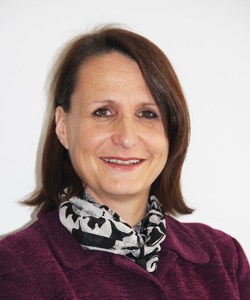
Alison Andreas MA (Oxon)
The Principal serves on all the Board Committees except the Audit and Risk Committee and Governance, Remuneration and Search. Alison joined Colchester Institute in 1997 and has held a range of management roles including in Human Resource Development and Quality. She has been a Senior Post-holder at the College since 2008, latterly Vice Principal: Quality and Support and was appointed as Principal and Chief Executive in 2014. Previously to working at the College, Alison studied French at the University of Oxford and held a range of management posts in large industrial organisations.
Head of Governance

Alison Bennett
Joining Colchester Institute as the Head of Governance in April 2024, Alison has experience of working in Education Governance supporting Multi Academy Trusts, schools, alternative provisions and special schools. She is also experienced in specialist panel work. Alison has successfully completed her level 4 in Academy Governance and level 3 in the clerking of School and Academy Boards .
In addition to this Alison is an experienced Governor and is the vice chair of Governors at two local schools.
Independent Members

Lisa Blake, CPFA LLB
Lisa is a Chartered Public Finance Accountant with a postgraduate diploma in Public Finance and Leadership from Warwick Business School. Lisa retired from BDO LLP in January 2024 where she had been a public sector audit Partner and the Regional Managing Partner for BDO East Anglia. During her audit career she worked with a range of public sector organisations including London Boroughs, District Councils and NHS provider and commissioning bodies.
Her career was in finance but her passion is in the Arts and Lisa is a keen photographer and musical theatre enthusiast!
Lisa joined the Board at Colchester Institute in May 2019, taking on the role of Corporation Chair in January 2025. As Chair of the Board Lisa is a member of all Committees expect the Audit and Risk Committee.

Sally Messenger PhD
Sally has focused her career in technical and vocational education and training (TVET) which has spanned teaching and research roles in further, adult and higher education, starting in further education in London and including eight years at the University of Surrey, plus senior leadership and management roles in the awarding body/accreditation sector. During fifteen years with the City & Guilds Group she held a number of positions including Director of Portfolio Management & Development, and Director of Professional Development at the Institute for Leadership and Management.
Since 2012 Sally has worked as an independent TVET advisor, with a particular focus on supporting WorldSkills International on a wide range of development projects, all designed to raise the standard and profile of TVET globally.
Sally’s voluntary work includes being a trustee for the Savoy Educational Trust, an Enterpriser Advisor for the Greater Essex Hub, and a member of the Education and Skills Committee for the Royal Aeronautical Society,
Sally joined the Corporation Board in January 2024 and became a member of the Curriculum and Quality Committee. In March 2025 she was appointed Vice-Chair of the Corporation Board and in Spring 2026 she also became Vice-Chair of the Audit & Risk Committee.

Stephanie Bettinson FCCA
Stephanie is a senior audit manager at BDO Ipswich, now part of the senior management team for East Anglia as well as the lead for people recruitment, retention and management. She is a qualified chartered accountant, with extensive experience of leading and managing large scale complex corporate audits. Her role is split between continuing to lead on large corporate audits, whilst also managing the team across East Anglia and implementing the strategy for the region. Her experience is far ranging, with extensive experience in the construction, healthcare and technology sector.
Stephanie joined the Board in April 2022 and is the Chair of the Audit and Risk Committee.

Richard Block
Richard qualified as an Environmental Health Officer after completing a BSc (Hon’s) Environmental Health over 25 years ago. He has subsequently completed several post graduate management and leadership qualifications and has developed substantial experience fulfilling a range of senior roles within both London Borough Councils and District Councils. Richard is currently Assistant Director for Corporate and Improvement at Colchester City Council with responsibility for key corporate services including IT, Human Resources, Governance and Communications and Marketing.
Richard joined the Board in April 2022 and is currently a member of the Finance and Resources Committee.

Chris Donovan
Chris is a qualified chartered accountant and fellow member of the Institute of Chartered Accountants in England & Wales (ICAEW), and a BA (Hons) in Accounting & Finance from the University of Essex. He has several years’ experience in positions of a senior financial leadership capacity and is currently the Group Finance Director of Horizon Parking Limited; a group of companies that specialise in parking management and operation, facilities management and consultancy services within retail and hospitality sectors.
Chris’ earlier career was founded in audit and assurance practice at PKF (UK) LLP where he achieved his chartered accountancy qualifications, and later joining KPMG LLP.
Chris joined the Board in August 2023 and is a member of the Finance and Resources Committee

Caroline Williams
Caroline Williams is an Ofsted Inspector. She is a qualified teacher with a masters degree in education. Caroline was formally a deputy principal of a GFE college in Essex and prior to that served as a vice principal responsible for curriculum and quality. Caroline held senior leadership positions for 17 years during which time she was responsible for quality improvement, 16-19 study programmes, adult learning, apprenticeships, higher education and provision for learners with high needs, learner support and careers education. Caroline continues to work with providers to support quality improvement.
Caroline joined the Board in October 2022 and is the Chair of the Curriculum and Quality Committee.

Simon Attwood, MCIOB CEnv MIEMA
Simon joined the Board in January 2024 and is a member of the Audit and Risk Committee.

Marco Iciek BA(Hons) PGCE
Marco joined the Board in January 2024. He is a member of the Curriculum and Quality Committee and is the Link Governor for Safeguarding.

Sanjeev Arya MBA
Sanjeev has worked extensively in the field of Information Technology and Software for nearly 30 years. He has a Bachelors in Computer Science and Masters in Business Administration from India. Sanjeev started his career in 1995 with an Indian telecom company, and since then has worked in the UK, Europe, USA and Australia with technology services and enterprise software firms holding various leadership positions. Currently, he is advising and consulting start-up and scale-ups on growth, impact and strategy.
Sanjeev joined the Board in October 2024 and is a member of the Curriculum and Quality Committee as well as the Governance, Remuneration and Search Committee.

Marie-Ann Capps
Working as a Sustainability and Climate Change Officer at Colchester City Council, I am exposed to a wealth of information around how our human actions and behaviour impacts our environment, the biodiversity of our local area, and the sustainability of our way of life. The climate is changing. We need to change and adapt with it. Over the next couple of years I will be working closely with the Environment and Sustainability Group at Colchester Institute to identify ways to co-create, collaborate and deliver messaging and projects to help drive that adaptation and behaviour change.
I have always been passionate about the natural world, particularly our blue spaces. Living in Clacton on Sea gives me a wonderful opportunity to experience nature in it’s full force along the coastline. My hobby is sea swimming and cold water therapy. Recently my business partner and I have started Essex EcoTherapy. This is an organisation, based in Clacton, which provides people with an opportunity to engage in cold water therapy. Among many other conditions, cold water therapy has been proven to help reduce symptoms of anxiety, stress and depression. We provide a structured learning environment where people can reconnect with nature in a safe space, fully supported by experienced Open Water Safety experts. I am also a qualified Mental Health Therapist and support The Sanctuary for Mind in Clacton as a Mental Health Support Worker.

Tony Farrar
Tony is a Chartered Civil Engineer who graduated following a four-year “sandwich” course comprising six-month periods alternatively spent between City University and industry – effectively, an Apprenticeship. His career has encompassed various engineering and operational roles first with Anglian Water and then working on international assignments advising governments and water service providers on improved operational performance and customer service.
In addition to preparing and delivering client employee Training Plans, roles relevant to being a Governor include part-time lecturing, as a National Vocation Qualification Assessor and as Chairman of British Standard Committees.
As a reason for becoming a Governor, Tony said: “I have had a worthwhile and successful career and now wish to pay back to the community by supporting young people as they start out on their own careers.”
Tony became a Governor in April 2026 and is a member of the Board and of the Curriculum and Quality Committee.
Staff Members

Adam Fair
My name is Adam Fair, and I’m proud to be a newly appointed staff governor at Colchester Institute. As a former student and now a staff member, as well as a parent of current students, I have a deep and personal connection to the college. I’m passionate about making Colchester Institute a fantastic place to work and learn, and I’m committed to contributing positively to its future. In this role, I look forward to representing the views of staff, supporting collaboration across the college, and helping to ensure the college remains a thriving, inclusive, and forward-thinking community for all.

Nicola Jay
I am proud to serve as Staff Governor representing the Business Support team. With over 30 years of experience in HR and Learning and Development, I am committed to motivating and inspiring learners and apprentices of all ages to reach their full potential. I bring a wealth of practical knowledge and a passion for supporting personal and professional growth. I am dedicated to building an inclusive culture where every student and staff voice is heard and valued. I am also a SEND Ambassador, championing accessibility and inclusion across the organisation, supporting learners to overcome barriers and achieve success.
Student Members

Kay Adelani
Kay was appointed to the Board in the November 2025 and is a FE Student Governor.
Co-opted Governors

Steve Blake
Steve is an experienced programme director having worked on major projects in the public and private sector. He has led construction, business change and technology programmes for central government departments and agencies. Most of his work has been in law enforcement but he has also worked in health care, property management, defence, transport and oil & gas sectors. He has held various roles in project delivery including Director of Finance.
Steve is a Chartered Accountant and a Chartered Civil Engineer
Policy on access to information not contained in the Publication Scheme
Introduction
From 1 January 2005, in addition to accessing standard information via the Publication Scheme, a person may make a request for specific information which has not already been made available in the Publication Scheme. This must be dealt with in accordance with the provisions of the Freedom of Information Act 2000.
Requests for information
Requests for information :-
- Must be made in writing (including e-mail)
- Must include the name and address of the applicant
- Must attempt to describe the information requested
- Can state a preference for the form in which the information is to be received, such as, in written form, by inspection on the premises, in the form of a digest or summary.
Dealing with requests
All requests received should be sent to the Director of Human Resources who will ensure that the information is provided in accordance with the provisions of the Freedom of Information Act as follows:-
- Respond to the request within 20 working days
- Provide the information in the form requested, where reasonably practicable
- Advise the applicant if we do not have the information requested or if the information falls within the exempt categories.
- Ask for further information, if necessary in order to identify the information asked for.
- Assist the requester and provide advice as necessary.
Fee policy
Requesters will be charged a fee, to cover the costs associated with supplying the information.
On receipt of the application for information, a fees notice will be issued detailing the amount payable. Information will not be supplied until the fee is received.
Record keeping
Good record management procedures are necessary to respond to requests for information in compliance with the FOI Act. The college procedures will therefore be reviewed and revised and managers will be expected to adhere to these.
These will include separate procedures on Electronic Records management including E-mail.
The following is a general guide to good record management:-
- Bear in mind the possibility of future public access to all files. Avoid comments which could be misunderstood or cause embarrassment on general release.
- Documents should be drafted in such a way that exempt information eg. personal data can be edited out before release.
Only keep the information that is really needed. Review files and eliminate superseded drafts. - Adhere to legally defined retention periods.
- Ensure confidential information is disposed of appropriately (shredded in the case of paper)
Complaints
Applicants dissatisfied with the college’s response to a request for information may raise the complaint through the college Compliments and Complaints procedure. If he/she is still dissatisfied with the college’s response having exhausted the internal procedure, he/she has the right to complain to the Information Commissioner.
Further Governance Information
Non-confidential Minutes are published after they have been approved at the next meeting of the Board/Committee, and will remain on the website for two years from the date of the meeting. Minutes are normally added to the website at the end of the term in which they were approved. For copies of non-confidential minutes from earlier years please contact the Head of Governance at: chairs@colchester.ac.uk